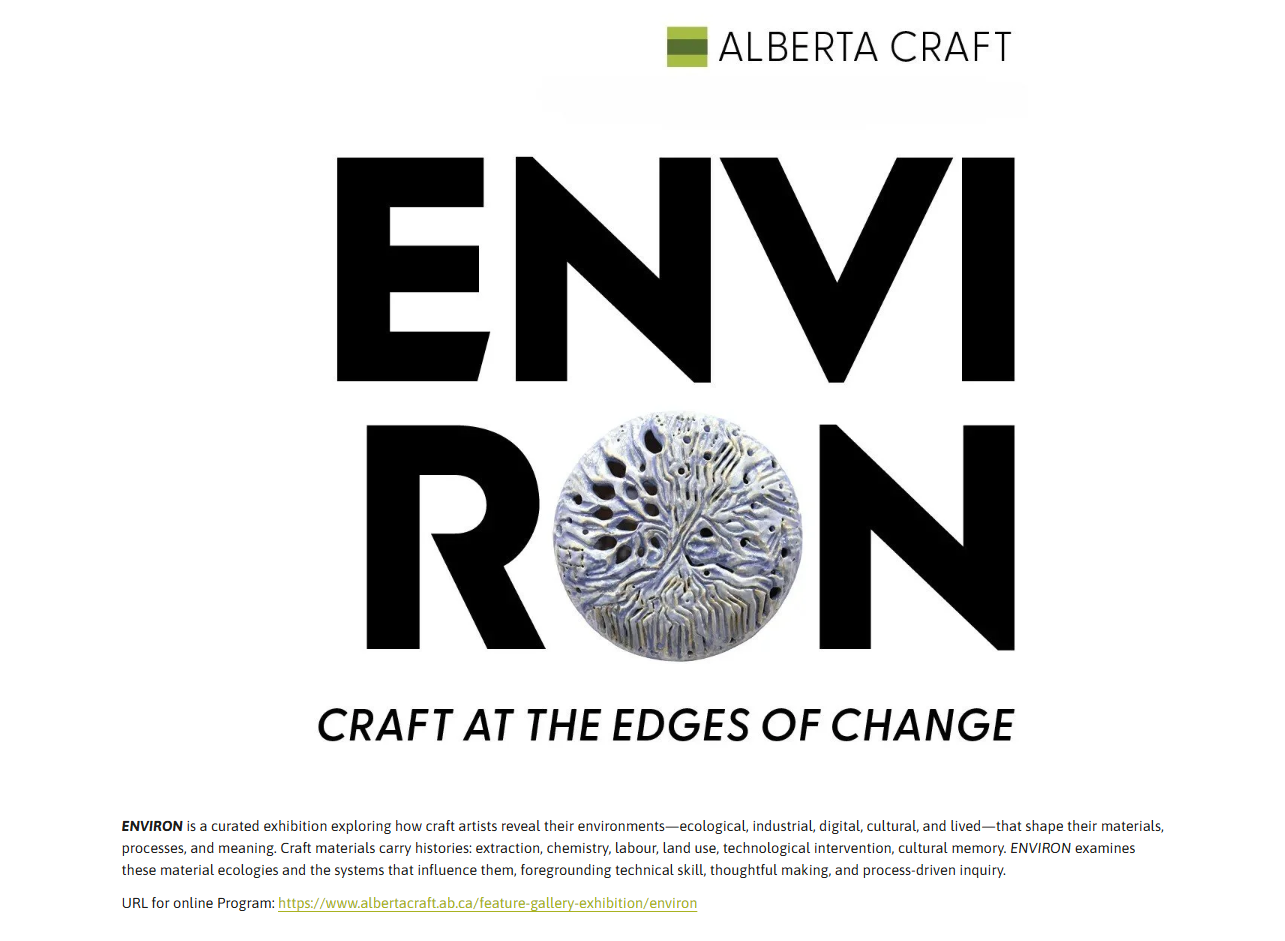
ENVIRON
From the website: https://www.albertacraft.ab.ca/feature-gallery-exhibition/environ
“Nothing we make is neutral.”
Materials carry histories of land, labour, and use. Through clay, fibre, metal, and found matter, ENVIRON brings together artists who reveal how making connects us to the environments we shape, and that shape us.
Participating artists: Ann Mansolino, Anna Burger-Martindale, Brielle Reeves, Cece Marin, Ciara Linteau, Dale Ladouceur, Jayda Karsten, Jennea Frischke, Jocelyn Crocker, Jodie Stevens, Jordan Munro, Kimberly Jones, Krista Acheson, Lara Felsing, Lindy Pruitt, Madison Melley, Melanie Barnett, Melissa Pedersen, Melony Stieben, Michelle Goulet, Nahanni McKay, Shannon Neumann
Saturday, June 13, 202610:00 AM
Saturday, October 17, 20265:00 PMAlberta Craft Feature Gallery10186- 106 StreetEdmonton, AB, T5J 1H4
Finding Connections in ENVIRON
In June, I attended the opening of ENVIRON, a group exhibition at the Alberta Craft Council exploring the relationships between making and the environments we inhabit. I'm sharing a few photographs from the opening as a chance to revisit the exhibition and the ideas connecting my work.
I was particularly delighted when the curator told me that all the work in my corner of the gallery had been affectionately dubbed the "Cobalt Corner." It seemed a fitting description! My contribution included You Are Exactly Where You Need to Be, Lost (2025), Icons (2025), Salty Bomb (2025), The Atomic Structure of Cobalt Has Been Updated Without Notice (2025), and Wu's Experiment (2025), alongside photographs of Torn (2025).
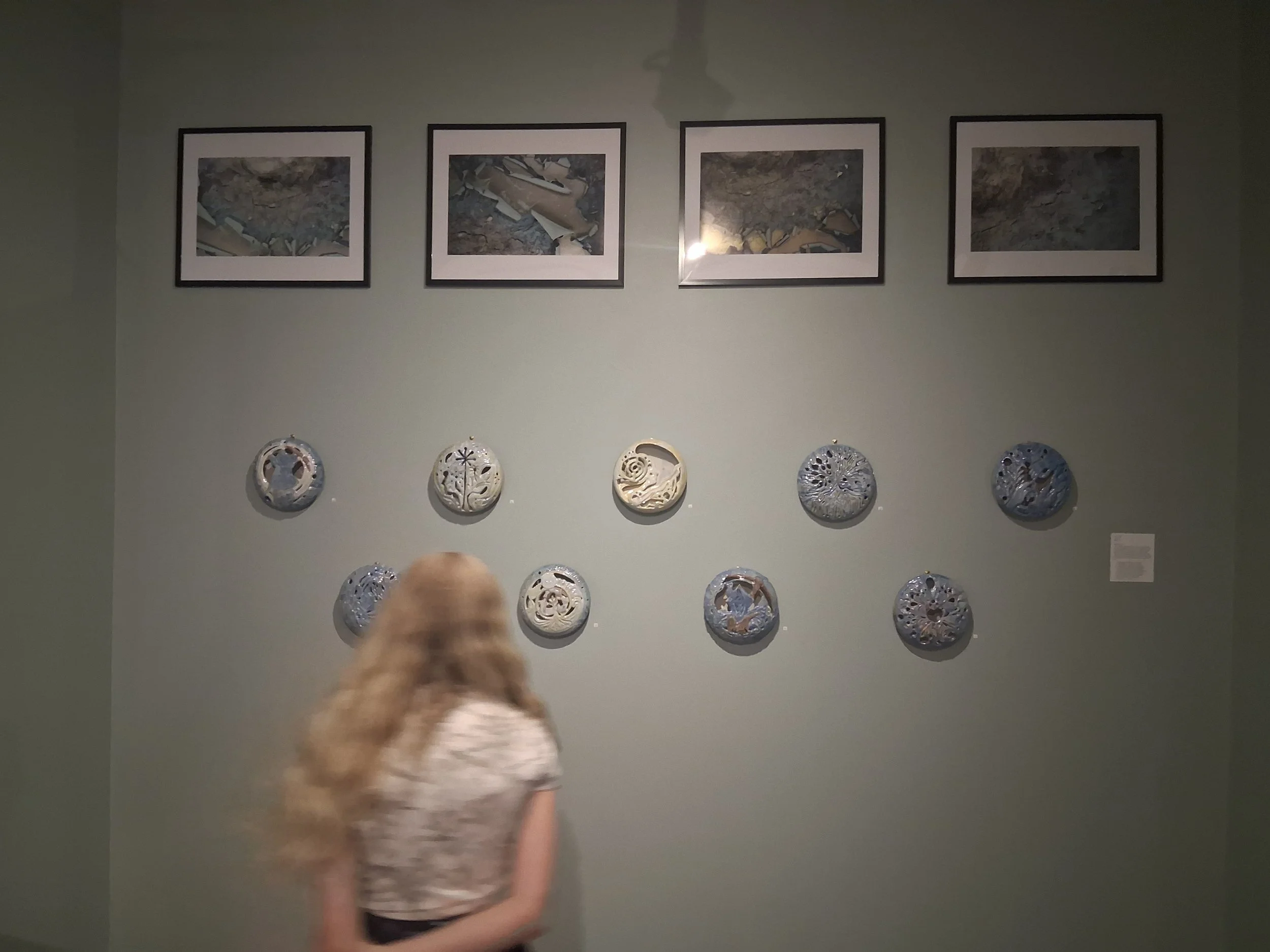
Image: Torn photographs above Icons.
Although these works take different forms, they share an interest in the systems we create to understand and shape the world, and the material consequences that can remain hidden within them.
In You Are Exactly Where You Need to Be, Lost, ceramic forms and geometric diagrams bring together cobalt, copper, geological processes, and technological systems. Drawing on the geometric language of Swedish artist Hilma af Klint, the work explores intersections between scientific and spiritual ways of understanding the unseen. Its crystalline glazes also have a language of their own. Unplanned bubbles, cracks, and fractures reveal the tensions of the firing process, reminding me that making involves listening and responding to materials as much as directing them.
Icons considers what happens when complex conversations are translated into simplified visual symbols. Developed through extended conversations with ChatGPT, the ceramic forms echo the familiar language of digital interface icons. Each holds the residue of a much longer exchange, raising questions about what is gained and what is lost when meaning is compressed, circulated, and repeated. There is an intentional tension between their appearance and their making: they resemble the clean, efficient symbols of digital systems, yet they are slow objects, shaped by hand and fired over time.
In Salty Bomb, cobalt takes on a darker significance. The work responds to physicist Leo Szilard's proposal for a cobalt bomb, a theoretical nuclear weapon designed to maximise radioactive contamination. Its interlocking ceramic forms and shifting cobalt glazes evoke the movement between containment and dispersal. Here, a material associated with colour, craft, and technological progress also carries the possibility of catastrophic environmental consequences. A short video accompanying the work can be viewed here.
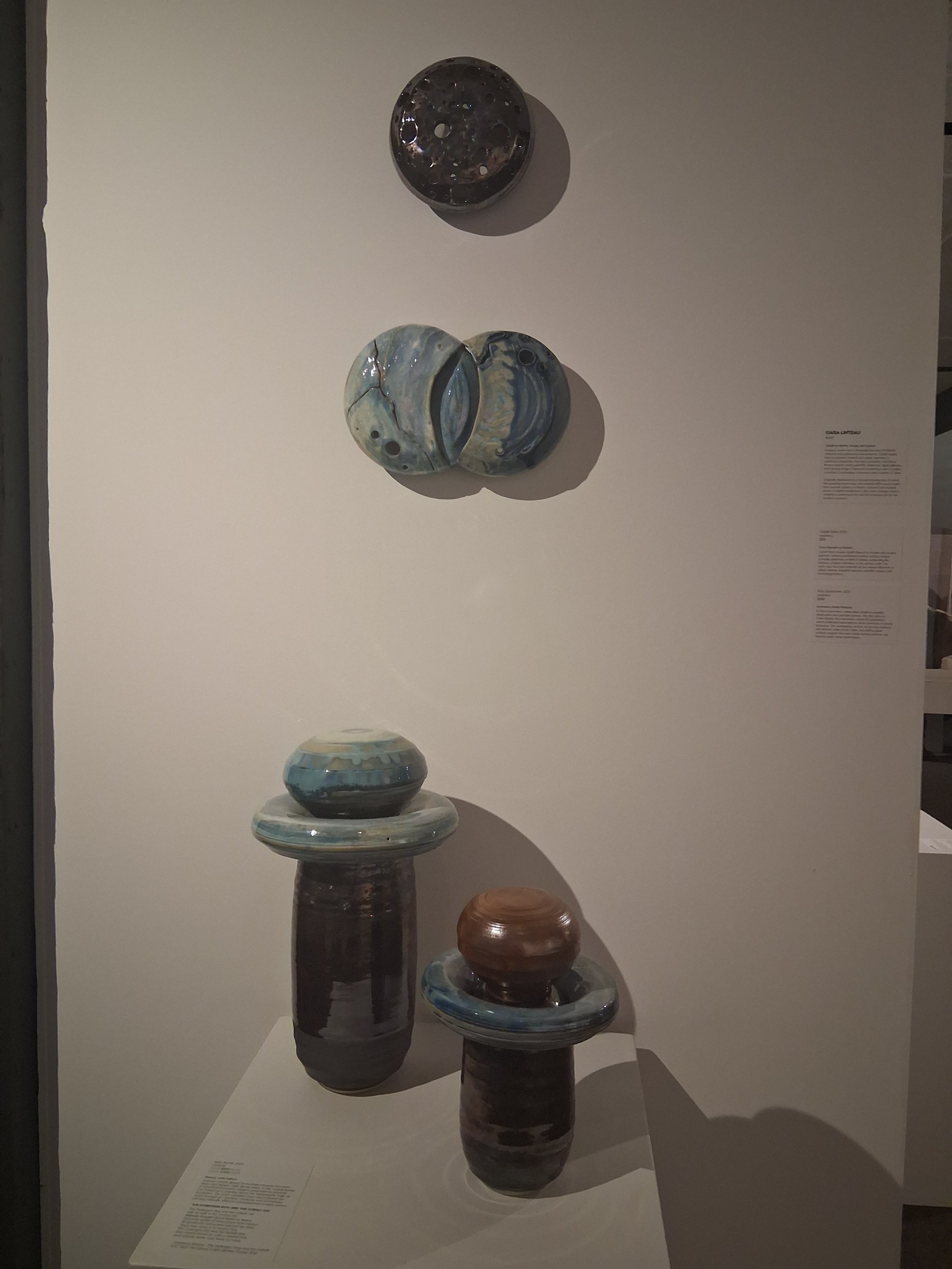
Salty Bomb (2025), The Atomic Structure of Cobalt Has Been Updated Without Notice (2025), and Wu's Experiment (2025)
Torn, documented through photographs, approaches material change from another direction. The remnants of a dissolved ceramic plate and its colourant spread across a sterile silver surface. The work draws attention to the processes through which materials break down, disperse, and leave traces behind. What remains when an object can no longer hold its original form?
Together, these works reflect my ongoing interest in the relationships between materials, technology, and the environments we create. Clay offers a way to think through these connections because it holds evidence of transformation. It records the effects of heat, chemistry, pressure, and time, often producing results that cannot be entirely anticipated. For me, these material processes are also a reminder that the things we make are never entirely separate from the larger systems that sustain them.
It was a pleasure to see the work brought together in ENVIRON and to spend time with the exhibition and its visitors. Thank you to the Alberta Craft Council, the curator, and everyone involved in bringing the exhibition together.
Works from the exhibition
Selected works are available through the Alberta Craft Council Shop:
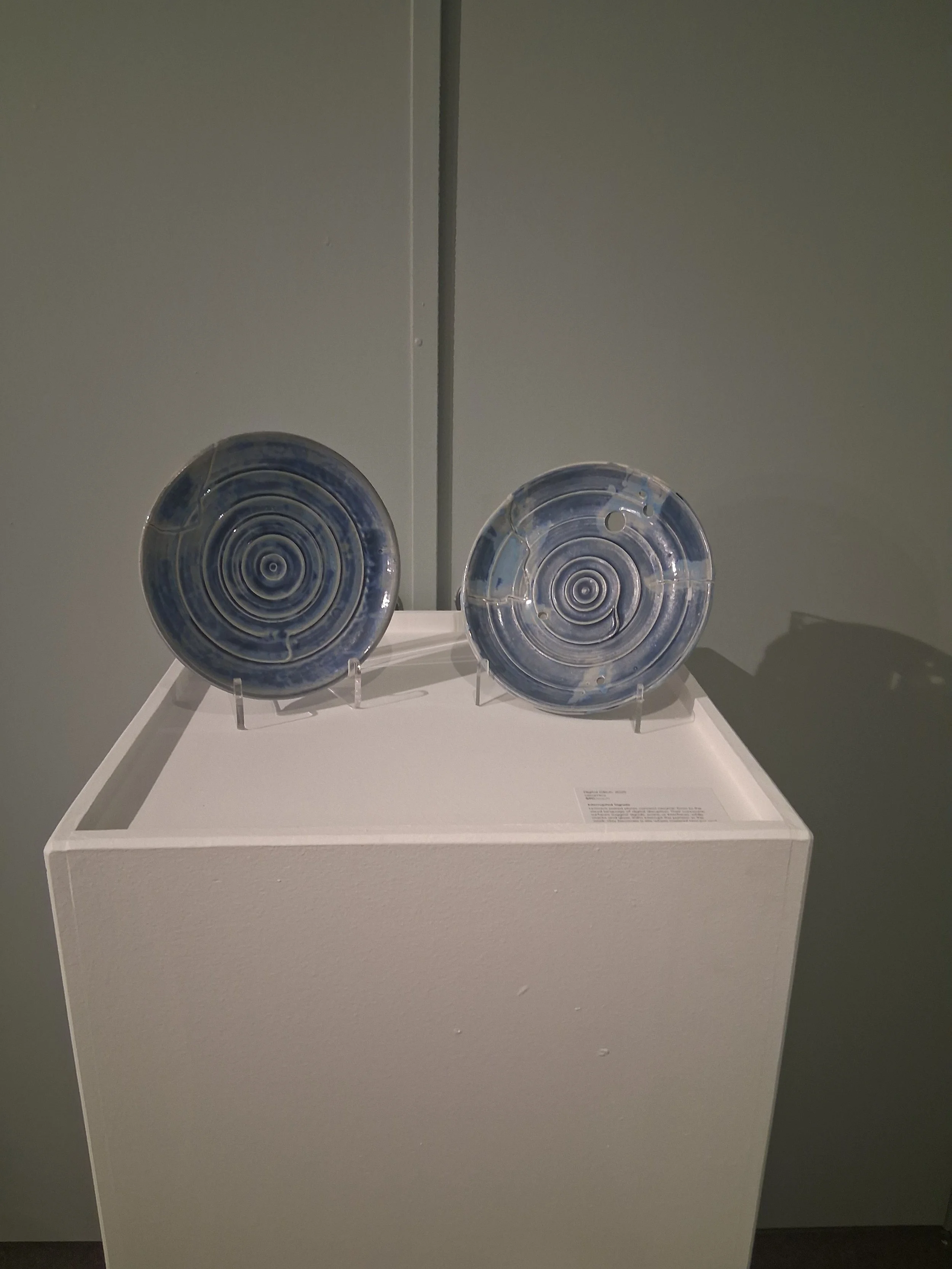
Ciara Linteau’s ceramic artwork exhibited in ENVIRON at the Alberta Craft Council.